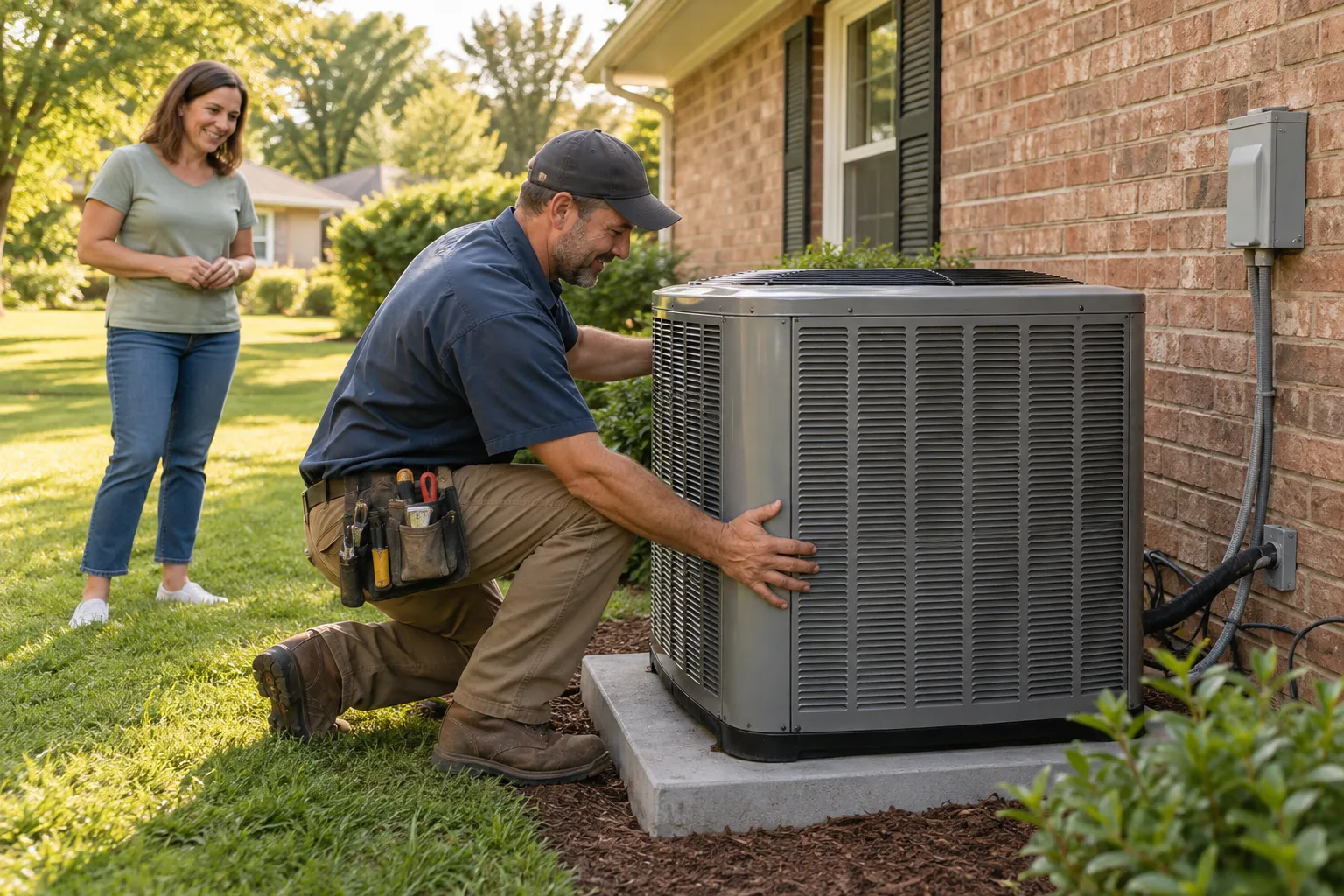
A new air conditioner is a big purchase. It helps to know the steps before anyone starts work. Individualsshoulder Heating & Air is a referral service. It does not install anything. Instead, it helps you understand your options, then connects you with independent providers in our network.
In the Fate area, air conditioners work hard. Summers are hot and humid, and attics bake. A system that is sized and installed well keeps rooms comfortable and lowers strain on the equipment. It also protects your home's value for a future sale. This page walks through the warning signs, the system types, the basics of sizing and ducts, and the questions to ask. With that in hand, you can compare written quotes with confidence and choose the path that fits your home and budget.
Step 1: Is Your AC Past Fixing?
Start with the basics. A unit that is old, loud or failing every summer may not be worth more repairs. Replacement is often worth a look when you see these signs:
- The system is 12 to 15 years old, or older.
- Repair bills are climbing each season.
- Some rooms stay warm while others are cold.
- The home feels sticky even when the AC runs.
- Your energy bills keep rising with no other cause.
If only one part failed, a repair may be enough. A provider can tell you which path fits.
Signs the System Is Near the End
Some warning signs are urgent. Take these seriously:
1. Warm air from the vents while the unit runs. 2. Ice on the indoor coil or refrigerant lines. 3. Grinding, squealing or banging from the outdoor unit. 4. Water pooling near the indoor unit. 5. A breaker that trips whenever the AC starts.
Turn the system off if you see ice, water or a burning smell. Running it can cause more damage. Then ask a provider to take a look.
Know Your Options: Types of Cooling Systems
Not every home needs the same setup. Here are the common choices:
- Central split system: An outdoor unit and an indoor coil share your existing ducts. This is the most common setup in ranch homes.
- Heat pump: One system that cools in summer and heats in winter. Mild winters make it a popular pick.
- Ductless mini-split: Wall units with no ducts. They suit additions, garages and older pier-and-beam houses.
- Packaged unit: Everything in one outdoor cabinet. It is less common but works in some layouts.
Ask the provider why they suggest one type over another.
Why Proper Sizing Matters
Bigger is not better. An oversized unit cools the air fast, then shuts off. It never runs long enough to pull moisture out. In a humid climate, that leaves the house clammy.
An undersized unit runs nonstop and still struggles. Good providers measure first. They look at square footage, insulation, windows, sun exposure and your hot attic. This is often called a load calculation. Be wary of any quote that picks a size by guessing or by copying the old unit.
Check the Ducts Too
A new unit cannot fix leaky or crushed ducts. In many slab homes, the ducts run through a very hot attic. Leaks there waste cool air. Ask the provider to inspect the ductwork and tell you what they find. Sealing or repairing ducts can be part of the job.
What an Installation Usually Includes
A complete job often covers these items:
1. Removing and disposing of the old equipment. 2. Setting the new outdoor unit on a level pad. 3. Installing the indoor coil and connecting the refrigerant lines. 4. Wiring, a drain line and a safety switch. 5. A new thermostat, if the old one does not match. 6. Startup, testing and a walkthrough of the controls.
Get these items written into the quote so nothing is a surprise.
Matching the System
The outdoor unit, indoor coil and furnace or air handler should work as a matched set. Mixed parts can lower performance and may affect the warranty. Ask the provider to list the model numbers for every part. Then you can check them against the manufacturer's specs.
Efficiency in Plain Terms
You will see a rating called SEER2. A higher number means the unit uses less power to make the same cooling. It usually costs more up front. In a long cooling season, the savings can add up. Ask for two or three options and compare the price gap with the likely energy savings.
Also ask about features. Variable-speed systems adjust to the weather and handle humidity well. That can matter in a tropical climate.
Protect Your Home's Value
A well-installed system helps your home hold its value. Buyers and inspectors notice the age and condition of the AC. Keep the paperwork: the written quote, model numbers, warranty details and the date of install. These records help at resale.
Next, Compare Quotes
Get at least two written quotes if you can. Line them up side by side. Look at the equipment, the scope of work, the warranty and the timeline. A small total on paper may leave out key items, so compare what is included, not just the bottom line.
Questions to Ask the Provider
- Will you do a load calculation?
- Are the permits and inspections included?
- Which parts and labor are covered by a warranty, and for how long?
- What will you do about my ducts?
- How do you protect floors and landscaping?
- Who handles cleanup and haul-away?
Clear answers are a good sign.
What's Included
Load Check
A provider measures your home and cooling needs so the new unit is sized correctly.
Old Unit Removal
Providers can haul away and dispose of the old equipment as part of the job.
Matched Equipment Setup
The outdoor unit, coil and air handler are installed together as one system.
Testing and Walkthrough
The provider tests the system and shows you the thermostat and filter basics.
Typical AC Replacement Costs
Prices vary by home, system size and brand. These are typical U.S. ranges, not quotes. Ask each provider for a written, itemized quote before you agree to any work.
| Item | Typical range | Notes |
|---|---|---|
| Central AC replacement | $5,000 – $12,000 | Depends on size and efficiency |
| Heat pump system | $6,000 – $14,000 | Cools and heats in one unit |
| Ductless mini-split | $3,000 – $7,000 | Per zone, no ducts needed |
| Ductwork repair or sealing | $500 – $3,000 | Varies with attic access |
| Thermostat upgrade | $150 – $600 | Smart models cost more |
| Pad, wiring or line set updates | $300 – $2,500 | Needed in some older homes |
How It Works
Share Your Situation
Request a callback or use the request form. Tell us about your home and your current AC.
Review Your Options
Learn whether repair, a new system or another type fits your home.
Meet a Local Provider
A provider in our network visits, measures and prepares a written quote.
Compare and Decide
Check the quotes side by side. Choose what fits your home and budget.
Why Call Individualsshoulder Heating & Air
Know Options First
See repair, replacement and system types laid out clearly before you talk price.
Independent Providers
Providers in our network do the work, not Individualsshoulder Heating & Air.
Clear Next Steps
Each stage is listed, so you know what happens first and next.
No Obligation
Request an estimate and compare. You decide whether to hire anyone.
Other Services
Need ac installation & replacement in Fate?
- Check your options before you commit
- Independent local providers in your area
- Repair, furnace or replacement help
- No obligation
AC Installation & Replacement FAQ
How do I know if I should replace my AC or repair it?
Age, repair history and the type of problem matter most. A unit over 12 years old with repeated repairs is often a replacement candidate. Ask a provider.
How long does an AC installation take?
Many installs take one to two days, though ductwork changes or electrical work can add time. Ask the provider for a schedule in the written quote, and request a callback to check provider availability.
Does homeowners insurance pay for a new air conditioner?
Usually not for age or wear. Some policies may cover sudden damage, such as a storm or power surge. Check your policy, and providers can often help document damage for a claim.
Reach a local provider
Ready to sort out your AC or furnace problem? Send a request or reach out by email. Share a few details and we will point you to a provider.
No obligation